At Montessori Magic Key, learning is a joyful journey that nurtures the mind, body, and spirit. Our classrooms are peaceful, purposeful environments where children are free to explore, discover, and grow at their own natural pace.
Following the pioneering work of Dr. Maria Montessori, we believe that children learn best through active, hands-on experiences rather than rigid lectures or repetitive worksheets. Real understanding unfolds through meaningful work, purposeful movement, and natural exploration.
INDIVIDUALIZED EDUCATION
The Core Pillars of Our Approach
Child-Centered Learning
Every child is unique, possessing individual interests, personal strengths, and a distinct timeline for growth. Our guides carefully observe each student, introducing targeted lessons and specialized materials that align with their specific stage of development. This individualized approach builds genuine self-confidence, personal responsibility, and an intrinsic desire to learn.
Learning Through All Five Senses
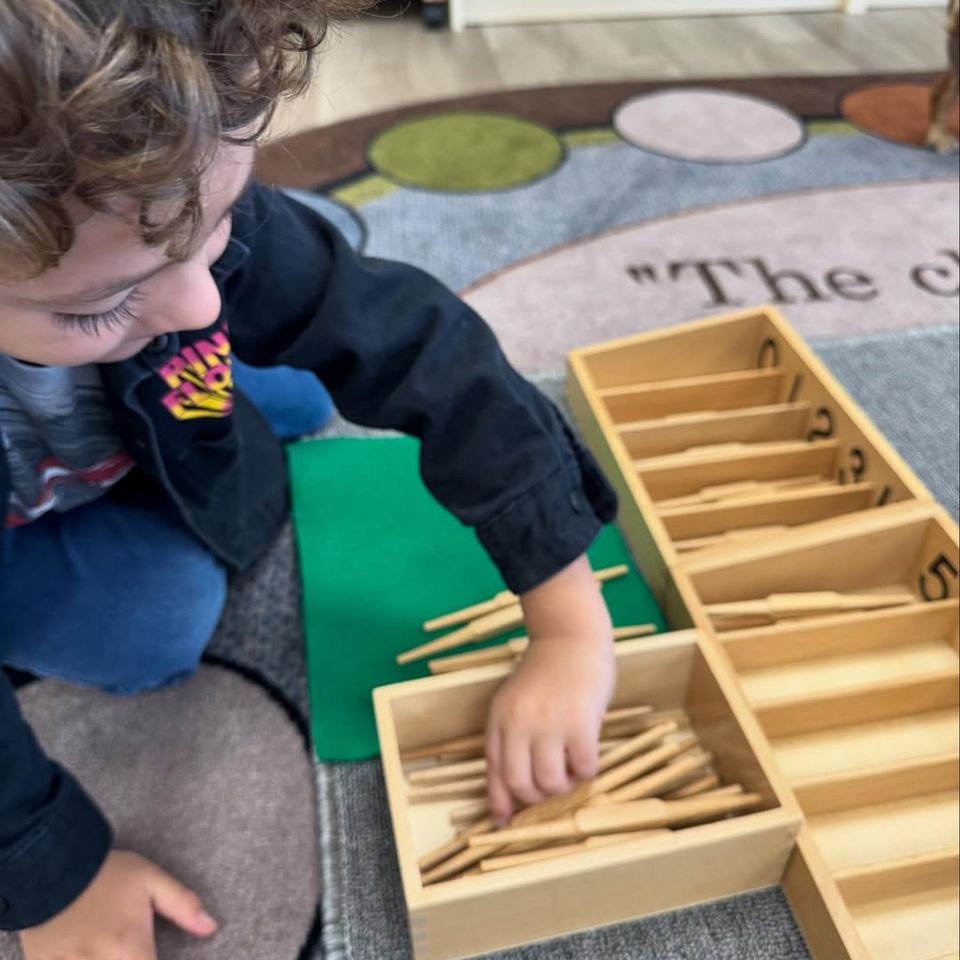
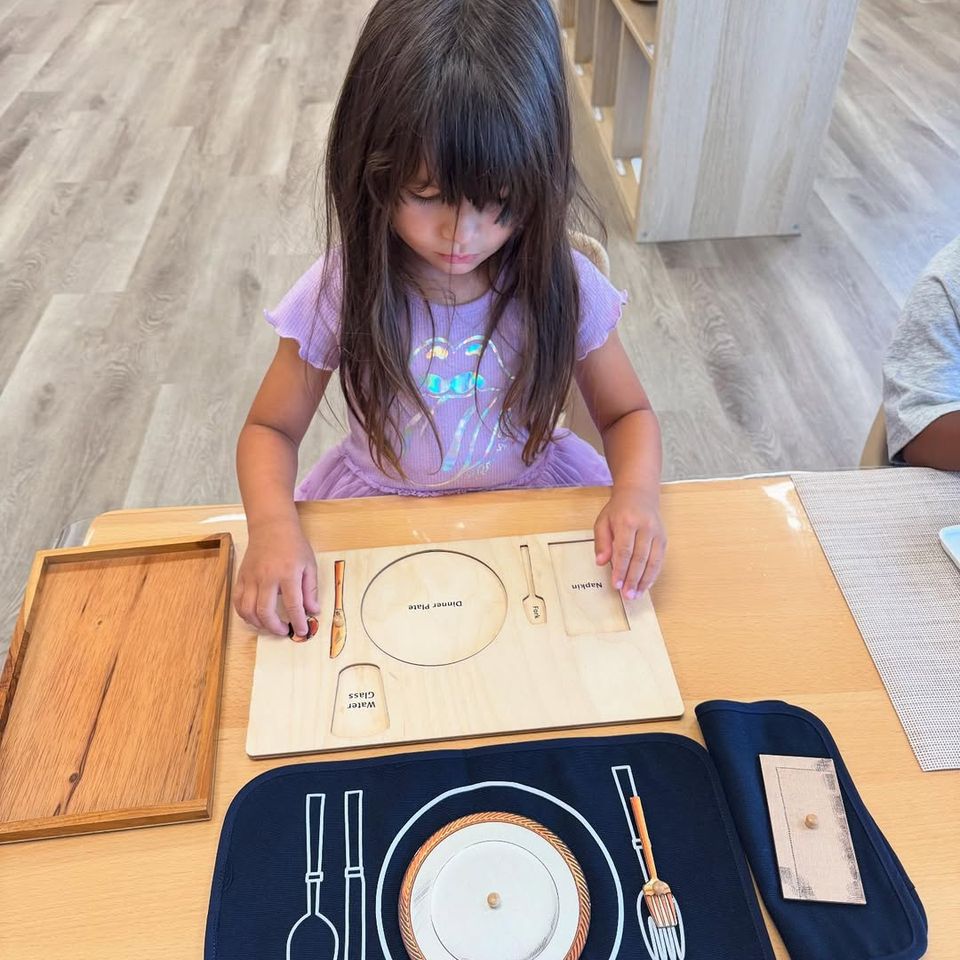
Children are naturally curious and eager to interact with the world around them. Our specialized Montessori materials engage all five senses, inviting children to touch, move, sort, and experiment with abstract concepts in concrete forms. By discovering ideas through direct experience, students build a deep, lasting foundation for academic concepts.
Freedom Within Structure
In our classrooms, children enjoy the freedom to select their own work within a thoughtfully prepared environment that maintains order and purpose. This balance gives children the space to pursue their personal curiosities while developing essential executive functions, including self-discipline, concentration, and task completion.
IN THIS TOGETHER
A Collaborative Learning Community
A Community of Ages
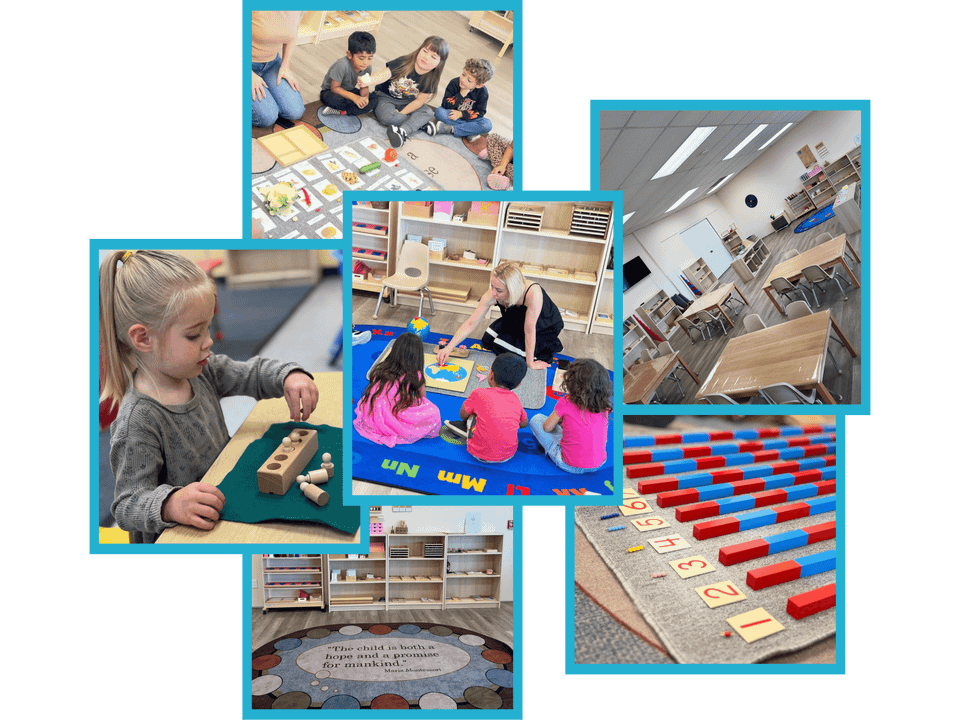
Our multi-age classroom environments create a rich, supportive social fabric. Younger children learn naturally by observing their older peers, while older students solidify their own knowledge and develop leadership qualities by mentoring younger classmates. This authentic collaboration fosters empathy, patience, and strong social awareness without competitive pressures.
The Role of the Teacher
Our educators serve as gentle guides rather than traditional lecturers. They inspire curiosity, observe individual progress, and introduce new materials exactly when a child is developmentally ready. You will often find our teachers sitting alongside students on the floor, observing quietly, encouraging effort, and celebrating each unique moment of discovery.
Children work through learning materials at their own unique rhythm, building genuine competence and internal satisfaction without being rushed or held back.
Hands-On Multi-Sensory Materials
Specially designed physical tools allow students to touch, move, and manipulate abstract math, language, and science concepts to ensure deep understanding.
Collaborative Multi-Age Classrooms
Mixed-age groupings naturally encourage older children to serve as confident mentors while younger students learn through observation and peer guidance.
METHODOLOGY COMPARISON
Montessori Education vs. Traditional Education
Understanding the structural differences between a Montessori environment and a traditional classroom helps highlight how our child-centered approach nurtures every aspect of early development.
Montessori Method
•Emphasis on both cognitive and social development.
•Teacher acts as a guide and observer.
•Environment and method encourage self-discipline.
•Learning is individualized.
•Mixed-age classrooms for peer teaching.
•Child chooses work independently.
•Concepts are discovered through hands-on materials.
•Child may work as long as desired on a chosen task.
•Child sets their own learning pace.
•Child identifies and corrects errors using materials.
•Learning is reinforced through internal satisfaction.
•Encourages care of self and environment.
•Children may move freely and work collaboratively.
Traditional Method
•Emphasis primarily on social development.
•Teacher is the central authority and controller.
•Teacher is the primary enforcer of discipline.
•Learning is both group and individual-based.
•Same-age grouping.
•Curriculum is predetermined by the teacher.
•Concepts are taught directly by the teacher.
•Work time is structured and time-limited.
•Pace is set by group standards.
•Errors are pointed out by the teacher.
•Learning is reinforced through rewards and repetition.
Visit Montessori Magic Key in Palmdale to experience our calm classrooms, meet our dedicated guides, and discover how our child-centered Montessori approach will help your child thrive.